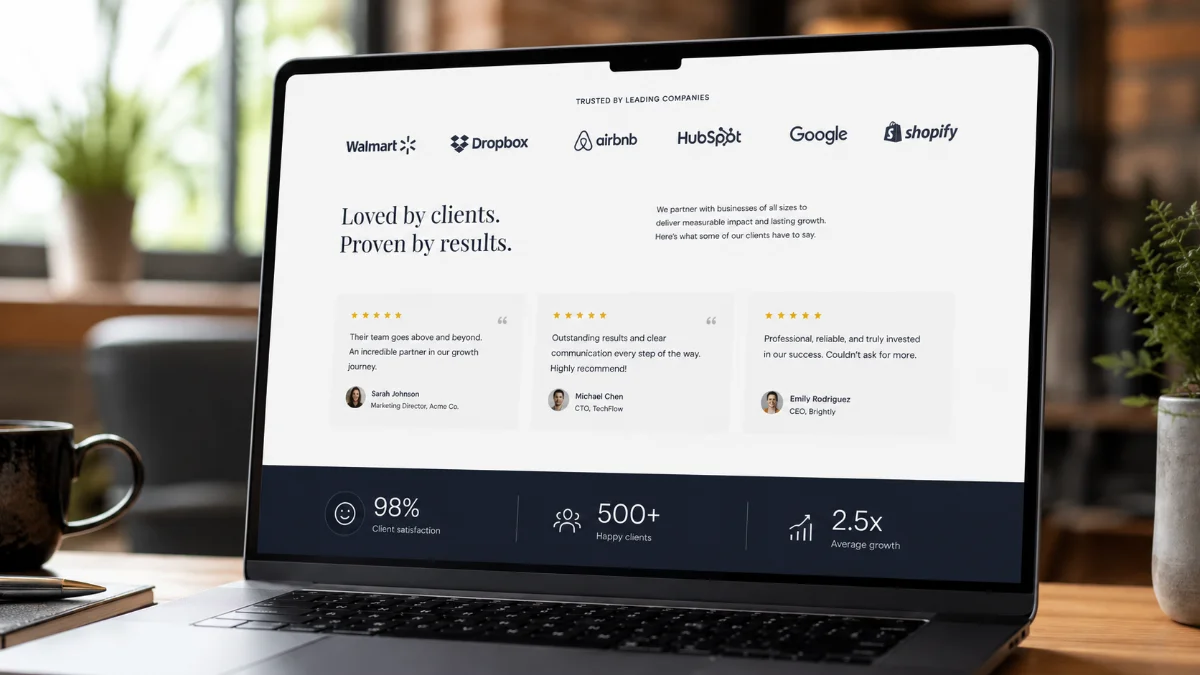
A landing page is a standalone web page built to do one job: turn visitors into leads or customers. People arrive here after clicking a link in an email, an advert, a social media post, or a search result. Unlike your homepage, it strips everything back to one goal, one message, and one clear action.
That focused simplicity is what makes them so effective. According to Unbounce, the average bounce rate for landing pages is just 18.2%, compared to 40.5% for standard website pages.
What Makes a Landing Page Different from Other Pages?
Most web pages try to do several things at once. A landing page doesn’t.
It has one purpose, one audience, and one outcome in mind. No distracting navigation links. No rabbit holes to follow. Just a clear offer, a compelling reason to say yes, and a button telling visitors exactly what to do next.
That’s why businesses use them for specific campaigns, product launches, email opt-ins, and paid ads. Sending ad traffic to your homepage is like inviting someone to dinner and dropping them off in the car park. They’ll wander around, get confused, and leave without eating.
Different Kinds of Landing Pages
Your homepage is your front door. It welcomes everyone, gives a broad overview of your business, and lets visitors find their own way around. It serves many audiences and many purposes at once.
A landing page is the opposite. It’s built for one specific audience who arrived from one specific source. The messaging matches exactly what they clicked on. Every distraction is removed, and the whole page pushes towards one action.
Use your homepage when you want to introduce your brand and let visitors explore what you offer.
Use a landing page when you want a specific group of people to do a specific thing: sign up, download, buy, or book.

The 4 Main Types of Landing Pages
What is a Lead Generation Landing Page?
A lead generation page collects contact details in exchange for something valuable. That might be a free guide, a consultation, a webinar, or a price quote. You’re not asking for a sale straight away. You’re starting a conversation with someone who has raised their hand and said “yes, I’m interested.”
Once they’ve opted in, you follow up, build the relationship, and move them towards a decision at their own pace. These pages work particularly well for service businesses where trust matters before a purchase.
What is a Sales Landing Page?
A sales page is built to convert visitors into buyers in a single visit. It walks them through the benefits of a product or service, backs it up with testimonials and social proof, and pushes towards a purchase.
A strong sales page removes doubt before the visitor even voices it. It answers objections, shows proof, and makes clicking “buy” feel like the obvious next step rather than a risk.
What is a Squeeze Page?
A squeeze page is the most stripped-back type of landing page. A headline, a short message, and a form. That’s it. The goal is to capture email addresses with as little friction as possible, usually by offering a newsletter, a free resource, or exclusive content in return.
They work because they give visitors no reason to leave without opting in. There’s nothing else to click, nothing else to read, and no way to browse elsewhere.

What is a Thank You Landing Page?
A thank you page appears after someone completes an action, like filling in a form or making a purchase. Done well, it’s more than a polite acknowledgement.
A good thank you page confirms what just happened, tells the visitor what comes next, and gives them something useful to do while you have their full attention. Share this with a friend. Book a call. Take a look at these related services. Don’t waste the moment.
How Do People Find Landing Pages?
You can drive traffic to a landing page in two main ways: paid and organic.
Paid Traffic
Paid channels (Google Ads, Facebook Ads, LinkedIn Ads) get people to your page fast. You choose exactly who sees it, when, and where. You pay per click or impression, and you can measure results immediately.
The downside is simple: when you stop paying, the traffic stops too.
Organic Traffic
Organic traffic (search engines, social media, email, word of mouth) takes longer to build but doesn’t cost you per visitor once it’s working. A well-optimised landing page can rank on Google and bring in steady traffic for months or years without ongoing ad spend.
Email Campaigns
Email is one of the most effective traffic drivers for landing pages. The email grabs attention and builds interest. The landing page closes the deal. Together they’re a powerful combination, and unlike paid ads, your email list is an asset you own outright.
Paid Social
Platforms like Instagram, Facebook, and LinkedIn let you reach people before they’re even searching for what you offer. Useful for building awareness, launching new products, and reaching audiences who don’t know you exist yet.
The right channel depends on your budget, your audience, and how quickly you need results. Most businesses use a mix of all four.
How to Improve Your Landing Page Conversion Rate
Getting people to your page is half the battle. Getting them to take action is the other half. Here’s what actually moves the needle:
- Write a headline that speaks directly to what your visitor wants or fears
- Keep copy focused on benefits, not features
- Use one clear call to action, not three competing ones
- Add real testimonials and specific social proof
- Make the page load fast on mobile (Google data shows mobile pages under 5 seconds see 70% longer average sessions)
- Run A/B tests on headlines, images, and button text
- Keep forms short; every extra field reduces completions
- Make sure the ad or email and the landing page match in tone and message
According to Adobe, 70% of brands increased landing page revenue through A/B testing. Some reported up to a 50% increase in revenue per user.
How to Tell if Your Landing Page is Working
These are the numbers worth watching:
Conversion rate is the most important metric. It’s the percentage of visitors who complete your goal action. What counts as “good” varies by industry and offer, but anything above 5% is a solid baseline to build on.
Bounce rate tells you how many people leave without doing anything. A high bounce rate usually means a mismatch between what people expected from the ad or email and what they actually found on the page.
Dwell time tells you whether your content is holding attention long enough for visitors to make a decision.
Traffic sources show you which channels are sending the most engaged visitors so you know where to focus.
Click tracking and heatmaps show exactly where people are clicking and where they’re dropping off. Useful for diagnosing the exact point where your page is losing people.
Frequently Asked Questions (FAQs):
Yes. A well-built landing page can rank on Google and drive organic traffic without any ad spend. Focus on a specific search term your audience actually uses, write content that genuinely answers their question, and make sure the page loads quickly on mobile. Schema markup and internal links help too.
The key is matching search intent. Google rewards pages that give people exactly what they came to find.
As many as you need. Research from HubSpot found that websites with 10 to 15 landing pages generate 55% more leads than those with fewer. Each campaign, audience segment, or distinct offer deserves its own dedicated page rather than a one-size-fits-all approach.
Think of each landing page as a specialist. It does one thing, and it does it well.
There’s no single answer, and anyone who tells you otherwise is guessing. Short pages work well for simple, low-risk offers like a newsletter sign-up. Longer pages work better when you’re asking for a bigger commitment: a purchase, a consultation booking, or a serious investment.
Match the length to the level of trust and information the visitor needs before they’ll act.
A website has multiple pages and serves a broad range of purposes. A landing page is a single page with a single goal. Most websites contain landing pages within them, but a landing page can also exist as a standalone page outside your main site structure, used exclusively for a specific campaign or offer.