Every other prospect call I take starts with the same question, asked slightly differently each time. “Should we be doing SEO or PPC?” “Are Google Ads worth it for a business our size?” “If we’ve only got a thousand quid a month, where should it go?”
The honest answer is almost always “both, but in different proportions depending on where you are right now”. The reason that answer never lands cleanly is the SEO and PPC conversation has been over-simplified for fifteen years – one side selling SEO as free traffic that’s always worth waiting for, the other selling PPC as instant results you can scale forever. Neither is true. They’re two different tools that do two different jobs, and if you only run one of them you’re leaving money on the table.
This post is the longer answer. The pros and cons of each, when to lean into one and when to combine them, how long SEO actually takes compared to PPC, where to put the first £1,000 a month and where to put the next £1,000 after that.
TL;DR
- SEO is unpaid Google rankings. Slow to build (4–9 months for meaningful movement), compounds for years once you have it, no per-click cost, but requires patience and consistent investment.
- PPC (mainly Google Ads) is paid placement at the top of search. Instant visibility, fully controllable, scales as fast as you can spend, but every click costs and the moment you stop paying the traffic stops.
- Most UK small businesses get the best returns from running both at once. PPC carries lead generation while SEO catches up. SEO compounds while PPC stays steady. Combined, you cover the same SERP from two angles.
- Pros of SEO: compounding returns, no per-click cost, builds brand authority, generates AI search citations in 2026, survives ad budget cuts.
- Cons of SEO: slow, indirect, vulnerable to algorithm changes, requires content and technical investment.
- Pros of PPC: instant traffic, geographic precision, A/B testable, scales overnight, full attribution, good for seasonal pushes.
- Cons of PPC: every click is paid, costs are rising (UK average CPC up 10–25% post-Sponsored-label rollout), stops working the second you pause, ad fatigue eats into CTR.
- Should I use SEO or PPC? New business with no organic presence: PPC first, layer SEO underneath. Established business with a working site: SEO first, top up with PPC. If needed and can you can afford: both, weighted differently by stage.
- Combined strategy: run PPC on the queries you can’t yet rank for organically; build SEO on the queries you can. Use PPC keyword data to inform SEO content priorities. Use SEO content to lower PPC quality scores and bring CPC down.
- Budget split rule of thumb: a UK small business starting from no organic presence with £1,500/month total should split it roughly 70% PPC / 30% SEO at the start, drifting to 40% PPC / 60% SEO by month 12 as organic catches up.
The basic difference between SEO and PPC
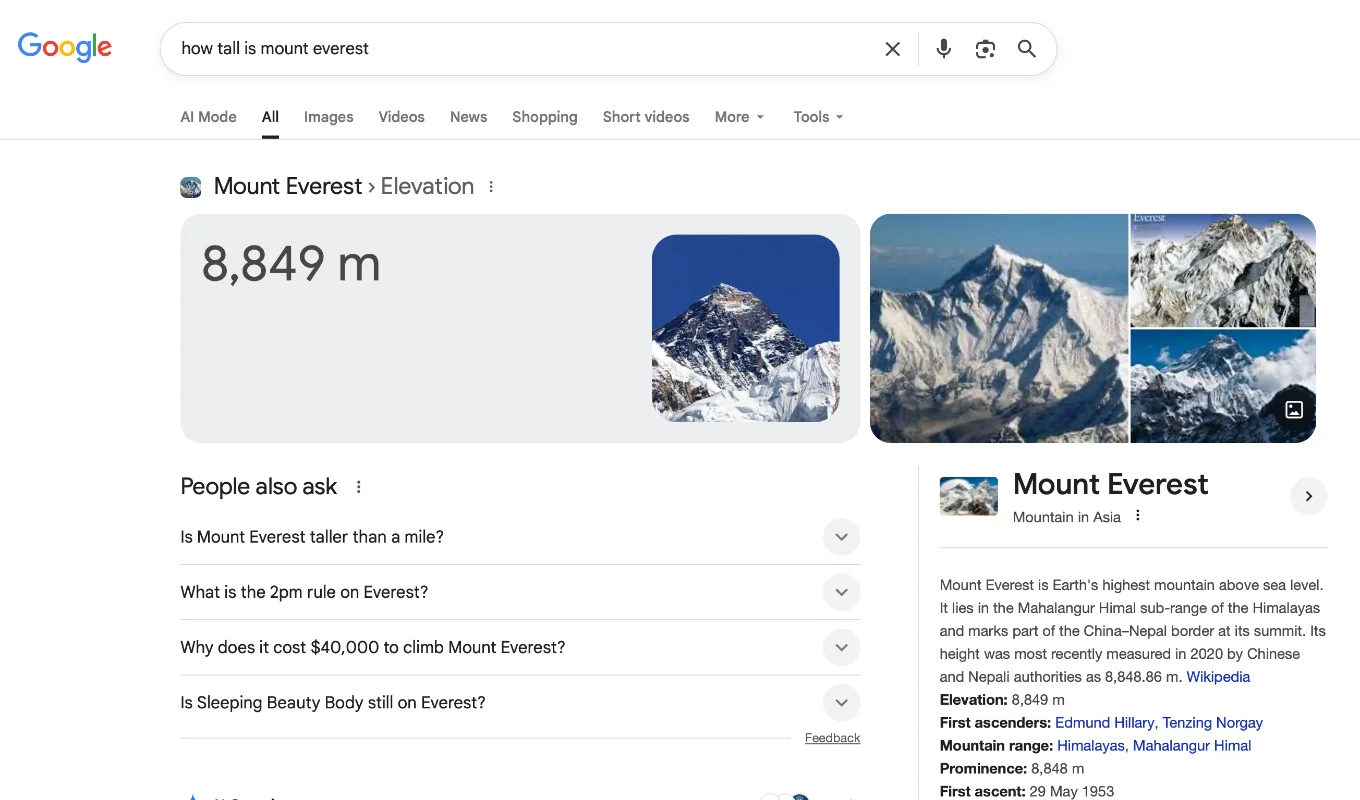
SEO is the work that gets you ranking in the organic listings – the ten blue links beneath the ads and if your site is optimised for it the Ai Overviews. You don’t pay Google when someone clicks. You earn the position by being relevant, authoritative and technically sound. The cost sits in the work: content, technical fixes, link earning, ongoing optimisation.
PPC – pay-per-click – is the auction-based ad placement above (and sometimes alongside) those organic results. You bid on a keyword, you pay Google every time someone clicks your ad. The work sits in the campaign setup, the keyword targeting, the ad copy, the landing pages, the bid management and the conversion tracking.
The fast way to describe the difference: SEO is an asset, PPC is a tap. Build the asset and it earns traffic for years; turn the tap off and the water stops.
Two different cost structures. Two different timelines. Two different risk profiles. Two different jobs.
Pros and cons of SEO vs PPC
What SEO gets you
- Compounding traffic. Rank a service page on page one for a high-value query and it can earn traffic for three, five, ten years with minor maintenance. The first link on Google still gets 27% of clicks on average across queries that show the standard ten-blue-links layout.
- No per-click cost. You pay to produce the page. After that, every visitor is free at the margin.
- Brand authority. Ranking organically for “[your service] [your city]” tells buyers you’re a real, established business – a different signal from a paid ad.
- AI citations. In 2026, the same pages that rank in organic search are the ones being cited by ChatGPT, Perplexity, Gemini and Google’s AI Overviews. PPC doesn’t get cited by AI tools. SEO does. (I went into this at length in From Search Engine to Answer Engine.)
- Survives a marketing budget cut. If you have to pause spend for three months because cashflow tightens, organic keeps producing while you pause. Try that with PPC.
Where SEO is weak
- Slow. 4–6 months for meaningful traffic lift on a competitive query, 9–12 months for revenue payback. If you need leads next Tuesday, SEO won’t be the answer this quarter.
- Indirect. The work happens upstream of the result. You can’t always trace a £6,000 sale back to a specific blog post or technical fix.
- Algorithm exposure. Google’s algorithm changes around a dozen times a year, with two or three “core updates” that can reorder rankings overnight. AI Overviews are now eating 25–40% of clicks for informational queries on the SME sites I work with – traffic SEO used to win, now answered before the click.
- Requires ongoing investment. Not a one-off project. Drop the work for six months and rankings drift.
What PPC gets you
- Instant traffic. Set the campaign up properly on Monday, you can have clicks on Tuesday. No other channel turns on that quickly.
- Precision targeting. Geography, time of day, device, audience segment, exact query. PPC lets you put your ad in front of someone searching “emergency plumber Newcastle” at 11pm without ranking for it organically.
- Full attribution. When PPC is set up properly with conversion tracking, you know which keyword produced which lead which produced which sale. That’s a level of clarity SEO can’t match.
- Scales overnight. If a campaign is working, you can double the budget on Friday and have double the traffic on Saturday. SEO doesn’t scale like that.
- Good for testing. Before you spend six months building SEO around a keyword, run two weeks of PPC against it and check whether the traffic actually converts. Cheap insurance.
Where PPC is weak
- Every click costs. UK Google Ads CPCs have climbed 10–25% in the seven months since Google’s Sponsored-label rollout, with some competitive verticals up over 40%. Legal, finance and home services regularly see £8–£25 per click.
- Stops the moment you pause. Cashflow problem, account suspension, credit card expiry – traffic goes to zero that day.
- Doesn’t build a permanent asset. £30,000 spent on PPC over a year delivers a year of traffic. £30,000 spent well on SEO over a year delivers traffic for several years afterwards.
- Ad fatigue. The same ad shown to the same audience for too long stops working. Constant creative refresh is part of the cost.
- Requires management. A good PPC account isn’t set-and-forget. Weekly bid management, search-term reports, negative keyword lists, landing page testing. Run it on autopilot and waste burns through the budget.
Evidence: what organic and paid traffic actually look like in a real client account
This is not a theoretical comparison. Here is a slice of Google Analytics data from a UK client we worked with, comparing the four main traffic channels running through their site over a sustained reporting period – display ads, paid search, organic search, and referrals.
| Metric | Display | Paid | Organic | Referral |
|---|---|---|---|---|
| Bounce rate | 83.98% | 76.71% | 53.45% | 65.49% |
| Pages per visit | 1.36 | 1.71 | 3.05 | 2.51 |
| Session duration | 0:27 | 0:46 | 2:15 | 1:53 |
Three patterns worth pulling out of those numbers.
Bounce rate. Display traffic bounces at 84%. Paid search bounces at 77%. Organic bounces at 53%. A 23-point gap between paid and organic visitors arriving at the same site for the same business – paid visitors land, glance, leave; organic visitors land and stay.
Pages per visit. Organic visitors look at 3.05 pages on average. Paid visitors look at 1.71. Organic traffic explores nearly twice as much of the site per session.
Session duration. Organic sessions last 2 minutes 15 seconds. Paid sessions last 46 seconds. Organic visitors spend almost three times as long with the content before they leave.
The reason for the gap is intent and self-selection. Someone clicking a paid ad has been interrupted mid-search by something they didn’t choose to engage with – the ad sits at the top of the page whether they wanted it there or not. Someone clicking an organic result has actively chosen your listing from the ten options available below the ads. They picked you. That self-selection shows up in every engagement metric afterwards.
The honest takeaway is not “PPC is bad”. PPC earns its place for the reasons covered in the next section. The honest takeaway is that on a like-for-like basis, the average organic visitor is meaningfully more engaged with the site than the average paid visitor. Which means PPC needs more help on the landing page and conversion side to match the result SEO delivers on intent alone. Skip that work and you’re paying for clicks that don’t convert at the rate organic does for free.
Should I use SEO or PPC for my small business?
The honest framing: it depends on where you are now and what you need next.
New business, no organic presence, need leads now. PPC first. You can’t wait six months for SEO to produce the first enquiry when you need to be paying yourself a salary next month. Start a tightly scoped PPC campaign on the two or three highest-intent commercial keywords, get the cashflow working, then begin layering SEO underneath. As soon as the SEO starts earning rankings, you can dial the PPC back.
Established business with a working site, some organic rankings, steady leads. SEO first. You already have something to build on. A PPC top-up is useful for the queries you can’t crack organically and for short-term campaign pushes, but the bulk of marginal investment should go into compounding the organic asset.
Service business with a fixed catchment area (plumber, solicitor, accountant, estate agent, dentist). Almost always both. Local PPC ads catch the urgent intent (“emergency”, “near me”, “now”) while local SEO + Google Business Profile catches the considered intent (“best”, “reviews”, “compare”). Two different buyers searching at two different stages, both on the same SERP.
E-commerce. Both, plus Google Shopping. PPC catches the bottom-of-funnel transactional queries, SEO catches the top-of-funnel research queries. Shopping carries the heavy lift on product-level search.
B2B with a long sales cycle. SEO weighted heavier. The buying journey is long enough that the compounding value of being cited consistently across multiple searches outweighs the speed of PPC.
If the answer to “which one should I use?” comes back as “obviously SEO” or “obviously PPC”, be wary. The honest answer almost always involves a split.
Is PPC worth it for a small business in the UK?
Yes, with conditions.
PPC is worth it when:
- You can track conversions properly. Without conversion tracking, you’re spending money in the dark.
- You have a landing page that converts. Sending paid clicks to your homepage burns budget. Build the landing page first.
- Your average customer is worth more than your cost per acquisition. Basic maths, often missed. If a customer is worth £400 lifetime and your PPC cost per acquisition is £500, you’re losing money on every sale.
- You can sustain the spend long enough to optimise. The first six weeks of any new PPC account are expensive learning. If the budget only stretches for four weeks, you’ll burn the budget before the account starts working properly.
PPC isn’t worth it when:
- You’re in a vertical where the CPC has run away from the unit economics. Some niches now have £20+ CPCs that no small business can absorb.
- Your conversion rate is so low you’d need 1,000 clicks to produce one sale. Fix the site first.
- You can’t tell the difference between a sale and a click. Without attribution, PPC reporting is just expensive theatre.
- You’re using it as a substitute for SEO rather than alongside it. Five years of pure PPC and no SEO means five years of accumulated rent with no asset to show at the end.
How long does SEO take compared to PPC?
PPC produces clicks within hours of launching a campaign. Whether those clicks convert is another question, but the traffic is immediate.
SEO timelines vary by competition, current site state and quality of the work, but a reasonable expectation for a UK small business:
- Month 1–2: technical fixes, content production, on-page optimisation. Very little visible movement.
- Month 3–4: first rankings appear on lower-competition long-tail queries. Traffic ticks up.
- Month 4–6: meaningful movement on mid-competition keywords. First enquiries directly attributable to organic.
- Month 6–9: competitive head terms start moving. Traffic and enquiries lift materially.
- Month 9–12: revenue payback typically achieved. SEO running profitably on a per-month basis.
- Month 12–24: compounding kicks in. The same investment delivers 2–3x the previous year’s traffic.
The mental model that helps: PPC is income, SEO is equity. PPC pays the bills this month; SEO is the asset that pays you for years after the investment stops.
When to use PPC instead of SEO
There are specific moments when PPC is straightforwardly the right tool and SEO is the wrong one.
- Launching a new product or service. SEO can’t rank a page that’s been live for three weeks. PPC can drive traffic to it on day one.
- Seasonal businesses. A swimming pool installer gets 70% of leads between March and September. PPC lets you concentrate spend on those months. SEO doesn’t have a seasonal lever in the same way.
- Limited-time offers or events. A two-week sale, a workshop next month, a launch event in June. SEO won’t move fast enough.
- Testing market demand. Before you commit to a six-month SEO build around a keyword cluster, spend £400 on PPC against the same queries. If the conversion rate is half what you expected, you’ve saved yourself a year of wasted SEO work.
- Geographic expansion. Opening a second office in a new city. PPC can produce leads on day one while you build out local SEO for the new location.
- Filling gaps where you can’t yet rank. If your competitors hold the top four organic positions and you’re stuck at position 11, paid placement gets you in front of buyers while the SEO catches up.
Can you do SEO and Google Ads at the same time?
Yes – They don’t conflict. They feed each other. Five reasons this combination outperforms either channel alone.
1. Coverage on the same SERP. A query like “commercial cleaners Newcastle” shows ads at the top, organic results below, and a local pack in between. Showing in two of the three is meaningfully better than one. Showing in all three is dominant.
2. PPC keyword data informs SEO priorities. Search-term reports in Google Ads show you the actual queries people type – including queries you wouldn’t have guessed. Take the highest-converting paid queries and build SEO content around them.
3. SEO content lowers PPC quality scores and CPC. Google rewards advertisers whose landing pages match the searcher’s intent. Strong SEO content on a service page improves the quality score of the PPC ad pointing at it. Higher quality score equals lower CPC equals more clicks for the same budget.
4. Brand defence. Even when you rank position 1 organically, competitors can buy ads on your brand name. Running your own brand-defence PPC ads sits above their ads in the same SERP and protects the click.
5. Remarketing. SEO brings visitors in. PPC remarketing brings them back. Combined, you get one channel acquiring and another channel re-engaging.
The catch: you do need both channels managed properly. Bad PPC plus bad SEO is worse than good PPC alone. The combination is a multiplier on competent work, not a substitute for it.
Does PPC help SEO rankings?
Direct answer: no, not in Google’s algorithm.
Google has stated for years that running Google Ads gives you no organic ranking benefit. The two systems are separate. Spending £10,000/month on Ads doesn’t lift your organic position by a single place.
Indirect answer: yes, in measurable practical ways.
- PPC data informs SEO strategy. Paid search-term reports show you the queries worth ranking for organically.
- PPC traffic to a page can increase its engagement signals – time on page, scroll depth, return visits. Signals organic ranking algorithms do appear to factor in.
- PPC builds brand familiarity. People who’ve seen your ad in paid search are more likely to click your organic listing when they see it later, which lifts CTR – a signal that does affect organic ranking.
- PPC accelerates testing. You can A/B test which landing pages convert before committing SEO budget to ranking them.
So while there’s no algorithmic bonus, in practice the two channels reinforce each other. Run them both well and the whole is greater than the sum.
How to allocate budget between SEO and PPC
There’s no universal split. The numbers depend on your sector, your stage and your current organic position. Here’s the approach I use with most UK small business clients.
Starting position: no SEO presence, need leads now.
- Month 1–3: 70% PPC / 30% SEO. PPC carries the lead generation; SEO begins the foundation.
- Month 4–6: 60% PPC / 40% SEO. Organic starts producing; PPC stays heavy.
- Month 7–9: 50% PPC / 50% SEO. Organic catches up; spend rebalances.
- Month 10–12: 40% PPC / 60% SEO. Organic carries the bulk; PPC fills gaps.
- Year 2: 30% PPC / 70% SEO in most cases. Organic compounds; PPC stays for specific use cases.
Starting position: existing SEO base, organic traffic already converting.
- 30% PPC / 70% SEO ongoing. PPC tops up the queries SEO can’t crack and runs brand defence; SEO compounds.
Starting position: time-critical launch or seasonal push.
- 90% PPC / 10% SEO during the push, normalising afterwards.
The mistake people make is treating the split as fixed. It isn’t. Review quarterly. As soon as one channel’s marginal pound returns less than the other channel’s marginal pound, shift the next pound across.
Common mistakes when running SEO and PPC together
Running them in separate silos. SEO team here, PPC team there, neither sees the other’s data. The PPC search-term reports are gold for SEO content priorities; the SEO ranking data tells you where to cut PPC spend. Share the dashboards.
Bidding on terms you already rank position 1 for organically. Common in agencies that get paid by PPC spend. If you own organic position 1, the PPC click on the same query is usually wasted budget – the buyer would have clicked you anyway. Brand defence is the exception; specific commercial intent terms aren’t.
Treating PPC as forever and SEO as never. Five-year-old PPC accounts with no SEO underneath are a slow-bleed marketing strategy. The money paid to Google in year one earned year one’s clicks; the money paid in year five earned year five’s clicks. If any of that £150,000 had gone into SEO instead, year five would have been free.
Treating SEO as a one-off project. “We did SEO in 2022.” That’s not how it works. SEO is gardening, not bricklaying. Stop tending it and it goes back to weeds.
Sending paid clicks to the homepage. Common, expensive mistake. A £4 paid click for “office cleaners Newcastle” landing on a homepage that talks about everything you do produces a conversion rate around 1%. The same click on a dedicated landing page for office cleaning in Newcastle produces conversions around 6–8%. Same money, six to eight times the result.
Measuring PPC on clicks instead of conversions. Cheap clicks that don’t convert are worse than expensive clicks that do. The CPC matters less than the cost per acquisition.
Measuring SEO on rankings instead of enquiries. Rankings on the wrong queries are decoration. Enquiries pay the bills.
Cutting PPC the moment SEO starts working. Tempting. Usually wrong. Better to taper, channel by channel, query by query. As each query gets to organic position 1, dial PPC down on that query specifically. Don’t kill the account.
Frequently Asked Questions
How long does SEO take compared to PPC?
PPC produces clicks within hours. SEO produces meaningful traffic lift in 4–6 months and revenue payback in 9–12 months on average for UK small business engagements. The trade-off is speed versus permanence – PPC is income, SEO is equity.
SEO vs Google Ads - which is better?
Wrong question. They do different jobs. Google Ads gives you instant, fully controllable, fully attributable traffic that stops the second you pause spend. SEO gives you compounding, free-at-the-margin traffic that takes months to build but keeps working for years. Most UK small businesses benefit from running both.
What are the benefits of combining SEO and PPC?
Same-SERP coverage, shared keyword data (PPC search-term reports feed SEO priorities), improved PPC quality scores from strong organic content, brand defence, faster testing of new markets or services, and risk diversification across paid and organic.
Does PPC help SEO rankings?
Not directly – Google has confirmed there’s no algorithmic ranking benefit from running Ads. Indirectly yes, through better keyword data, improved engagement signals, brand familiarity that lifts organic CTR, and faster ability to test landing pages.
Can you do SEO and Google Ads at the same time?
Yes, and you usually should. Running both well outperforms running either alone, with several reinforcing effects: shared data, improved quality scores, same-SERP coverage, brand defence, and remarketing on organic traffic.
The 2026 takeaway
SEO and PPC are not rival channels. They’re two halves of a properly built UK search strategy, and the businesses winning right now are running both in proportions that change as their organic asset grows.
The biggest mistake I see in 2026 is small businesses pouring £1,000–£3,000/month into Google Ads with no SEO underneath, having paid that rent for years on end, with nothing to show for it once the spend stops. The second biggest is small businesses running pure SEO with no PPC top-up, missing the queries they haven’t yet cracked and watching competitors buy paid placement above them on their own brand name.
Both mistakes have the same root: thinking of SEO and PPC as either/or instead of and. They’re not opposites. They’re the two halves of a single search marketing strategy. Get them working together – sharing data, complementing coverage, tapering the split as your organic grows – and you’ll outperform competitors who run either channel alone, on a smaller total budget.