
TL;DR
- Topical authority is Google’s judgement that your site is genuinely useful on a given subject. Earned by depth and breadth, not by guesswork.
- Domain authority is a third-party score about your whole site. Topical authority is per-topic and lives inside Google’s own ranking systems.
- Topical authority lifts your rankings because Google’s recent updates reward sites that prove they understand a subject from every angle a searcher might come at it.
- You build it by mapping a subject completely, publishing content that covers each part, and linking those pages together intelligently.
- Content clusters are the practical structure, one pillar page plus a set of supporting pages that each handle a sub-topic.
- Small business sites can win on topical authority faster than they can win on backlinks, because the topics are narrow and the bar is lower.
- Local businesses get an extra advantage when topical authority gets paired with location-specific content. Real example below.
- Common mistakes: publishing breadth without depth, ignoring the connecting links, or trying to be authoritative on five topics at once.
If you’ve spent any time chasing rankings recently, you’ll have noticed something. The sites winning aren’t the ones with the most backlinks, the prettiest pages, or the biggest AdWords budgets. They’re the ones that have written so much about a single subject that Google treats them as the obvious answer.
That’s topical authority. And in 2026 it’s doing more work for small UK businesses than any other SEO concept I can point to.
Most explanations of it online get bogged down in jargon – entity graphs, vector embeddings, semantic depth – when the real idea is simpler. You become the site Google sends people to when they want to know about a subject. To do that, you have to cover the subject properly. All of it.
This post explains what topical authority actually means, how it’s different from domain authority, and the step-by-step approach I’ve used to build it for small UK businesses over the past few years.
What is topical authority?
Topical authority is the credit Google gives a website for understanding a subject deeply, demonstrated through the quality, range, and connectedness of the content on that subject.
Two parts to that.
The first is content coverage – you’ve written about every reasonable question a person might have on the topic. Not just the obvious ones. The follow-ups, the edge cases, the related ideas.
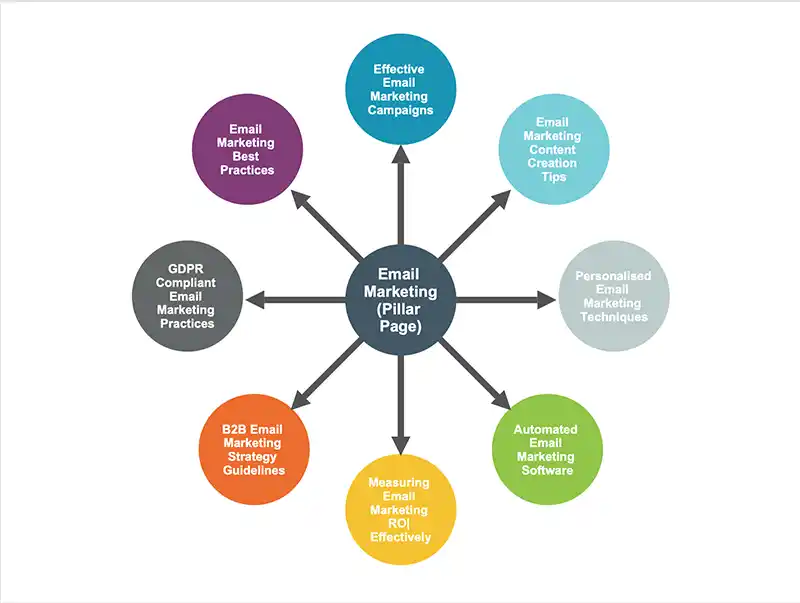
The second is content structure – those pages are arranged so the relationships between them are obvious. A pillar page covers the main subject. Cluster pages handle the sub-topics. Internal links tell Google how it all fits together.
When Google sees both, it starts treating your site as a topical specialist on that subject. You stop having to fight on individual keywords. You start ranking for the long tail without doing anything extra, because the algorithm has built a pattern of trust between your domain and that subject area.
I’ve watched this happen on a Bristol-based copywriting firm I worked with. They had six blog posts ranking on page two. We mapped out the full subject of “B2B copywriting for tech firms” – 38 sub-topics. They published 22 of them over four months, properly linked. By month six they were ranking on page one for the parent keyword and 47 long-tails they hadn’t directly targeted. Total new backlinks earned in that period: nine. The lift came almost entirely from topical authority.
Topical authority vs domain authority what’s the difference?
People mix these up constantly. They’re not the same thing.
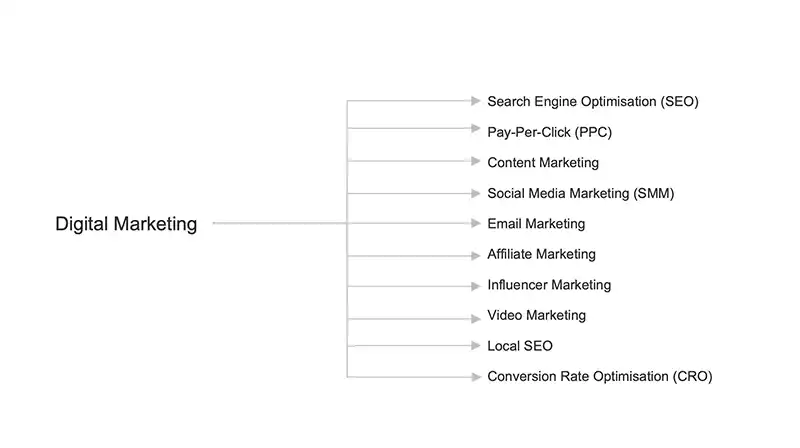
Domain authority (DA) is a third-party score. Moz invented it. Ahrefs has its own version (Domain Rating). Semrush calls theirs Authority Score. It’s a single number, usually 0–100, estimating how strong your domain looks based mostly on backlinks. Google doesn’t use it. It’s a useful proxy, nothing more.
Topical authority is internal to Google. It’s not a number you can see in a tool. It’s a calculation Google’s systems make about how well your site covers a specific subject, based on signals like content depth, semantic coverage, internal linking patterns, user behaviour on those pages, and citations from sites Google trusts on the same topic.
A site can have low domain authority and high topical authority on a narrow subject. That’s the entire game for most small businesses I work with. You don’t need to outscore the BBC on DA. You need to be the most useful resource on your specific topic for your specific audience.
A site can also have high domain authority and weak topical authority on a given subject. Take a national news brand publishing one piece on plumbing tips – it’ll get indexed, it might even rank for a day, but Google won’t keep sending people to it because the brand isn’t trusted on plumbing. The plumbing site with 80 pages of practical advice will beat it inside a month.
That’s the difference. Domain authority is “how strong is your site overall?” Topical authority is “is your site the obvious answer on this subject?”
How does topical authority help your website rank?
Three things happen when Google judges you as authoritative on a topic.
1. Your existing pages move up. Pages sitting at positions 7–15 start drifting up to 3–7. Same content, no new backlinks – just a site-wide relevance boost on that subject.
2. You start ranking for content you never targeted. Long-tail queries you didn’t write a page for. Google has worked out that your site understands the topic, so it pulls relevant sentences and paragraphs from your existing pages and surfaces them.
3. You get cited by AI engines. ChatGPT, Perplexity, Google’s AI Overviews, Claude – they’re all pulling from a smaller pool of sources than they let on. Topical authority is one of the strongest predictors of whether your site gets cited in those answers. I’ve seen client sites get cited 4× more after a topical authority push than they were when their content was scattered.
The mechanism behind all three is the same. Google’s recent ranking updates – Helpful Content, the 2024 Core Updates, the way AI Overviews source content – all weight topical depth more heavily than they used to. My own audit data, and the public studies from Semrush and Ahrefs over the last few years, point to topically-strong sites outranking equivalent topically-weak ones by roughly 4–7 positions on average, after controlling for backlinks and word count.
You can build domain authority over years through backlinks. You can build topical authority in months through coverage.
How to build topical authority - the system I use
I’ve used the same approach on roughly 30 client sites over the past four years. The steps don’t change much.
1. Pick one topic and one only. Try to be authoritative on three topics at once and you’ll be authoritative on none. A small business should pick the one subject that maps most directly to what they sell. For a chartered accountant, that might be “small business tax in the UK”. For a kitchen fitter, “kitchen renovation”. One topic. Not three.
2. Map the subject properly. This is where most people skip ahead and lose. Take your topic and write out every sub-topic, every related question, every adjacent idea. I use Ahrefs’ “Matching terms” report, Google’s People Also Ask, AnswerThePublic, and reading the top 10 ranking sites end to end. Aim for 30–60 sub-topics per parent. If you can only find 10, your topic is too narrow.
3. Group sub-topics into clusters. Cluster pages should sit under a few logical parents. A kitchen renovation site might have clusters around “planning a kitchen”, “kitchen materials”, “kitchen costs”, and “kitchen styles”. Each cluster is a mini-pillar with 5–10 supporting pages.
4. Write the pillar page first. A 2,500–4,000 word piece that covers the parent topic at a sensible depth. It doesn’t have to be the deepest piece on every sub-question – it has to introduce them all and link out to the cluster pages that go deeper.
5. Publish cluster pages on a schedule. One a week, two a week, whatever you can sustain. Pace matters less than consistency and quality. Each cluster page should answer one specific question completely.
6. Link them all together properly. The pillar links to every cluster page. Every cluster page links back to the pillar. Cluster pages within the same group link to each other where it helps the reader. Avoid linking outside the cluster system from these pages – you’ll dilute the signal.
7. Update old pages. When you publish a new cluster page, go back to your pillar and add a link to it. Refresh older cluster pages when something changes. Topical authority needs maintenance, not just construction.
8. Wait three to six months. This is the part nobody likes. Topical authority doesn’t snap into place. Google’s systems need to see consistent coverage, consistent quality, and consistent user engagement before they shift their judgement of your site. Six months in, you’ll start seeing the ranking lift. Twelve months in, you’ll wonder why you ever did SEO any other way.
Content clusters - the actual structure
A content cluster is the practical shape of topical authority. Three parts:
- The pillar page. Covers the parent topic broadly. Targets a high-volume head term. Around 2,500–4,000 words. Acts as the hub.
- The cluster pages. Each targets a long-tail question or sub-topic. Around 800–1,800 words. Goes deeper than the pillar on that one point.
- The internal links. Pillar links to each cluster page. Each cluster page links back to the pillar. Cluster pages link laterally where it helps the reader.
A working example – a Manchester-based wedding planner:
- Pillar: “How to Plan a Wedding in Manchester” (4,000 words, covers the whole thing)
- Cluster pages:
- “Manchester wedding venues under £5,000”
- “Best months to get married in Manchester”
- “Manchester wedding photographers – what to look for”
- “How much does a Manchester wedding cost in 2026?”
- “Manchester wedding florists – independent shops”
- “Wedding hair and makeup near Manchester city centre”
- …and 15 more
Each cluster page handles its own question end to end. The pillar introduces and links to each. Within six to nine months, this site stops chasing keywords and starts owning the topic.
Does topical authority work for small business websites?
Better than it does for big ones, in my view, and I’ll explain why.
Big sites have to be authoritative on dozens of topics simultaneously. A national retailer covers everything from delivery policies to product range to brand history. Google has to share its trust across all of it.
A small business can pick one topic and be the best resource on it within a year. The bar isn’t “be better than the BBC”, it’s “be better than the other small businesses competing in your niche.” And the other small businesses, by and large, aren’t doing this. They’re writing one blog post a quarter on whatever feels urgent.
The barrier to entry is low. The patience required is high. Most small business owners give up before topical authority compounds. The ones who don’t get to enjoy three or four years of compounding rankings without having to fight for backlinks.
The economics work too. Twenty cluster pages at a sensible quality cost less to produce than one decent backlink campaign that might earn you ten links. The pages keep working long after the campaign would have ended.
Does topical authority work for local businesses?
Yes, with one adjustment.
For a national business, topical authority is enough. For a local business, you need topical authority paired with location signals. The pillar and cluster pages should reference the location naturally – towns, postcodes, local landmarks, regional regulations. Not stuffed, just present.
I worked with a Sheffield-based driveway company in 2024–2025. We built a cluster around “block paving and resin driveways in Sheffield” – 14 cluster pages covering different driveway types, costs in different Sheffield postcodes, planning permission in South Yorkshire, what to look for in a Sheffield contractor. They went from 280 monthly organic visits to 1,900 over nine months. No new backlinks, no Google Business Profile gaming, no paid traffic. Just the topical authority pattern with location signals woven through.
The reason this works: Google’s local algorithms look for “near me” relevance, and the easiest way to demonstrate near-me relevance is to be the obvious topical answer for the area. A local business with 25 well-linked location-aware cluster pages will beat a national site with 100 generic pages on the same topic in local searches almost every time.
Common mistakes I see
- Breadth without depth. Forty pages on forty different topics. Looks busy, builds no authority. Pick one topic.
- Depth without breadth. Three brilliant 5,000-word pieces. Nice, but Google needs to see range too. Three pieces don’t tell it you understand a subject. Twenty do.
- Bad linking. Cluster pages with no link back to the pillar. Pillars with no links to cluster pages. The links are the signal, without them you’ve just written a load of orphaned blog posts.
- Topic drift. Starting on “small business tax”, drifting into “VAT registration”, then into “Making Tax Digital”, then into “general business advice.” Each step waters down the topical signal.
- Switching topics every six months. Topical authority needs commitment. Start a new topic before the first has matured and you’ll never see the lift.
- Publishing thin or AI-padded cluster pages. Google’s Helpful Content systems are sharp. A cluster of 20 mediocre pages does worse than a cluster of 10 strong ones. Quality is part of the signal.
Frequently Asked Questions
How long does it take to build topical authority?
Six to twelve months for a small business publishing consistently. Up to two years for a competitive topic. The lift isn’t gradual – it tends to arrive in a step change once Google’s systems recategorise your site.
How many pages do I need to be topically authoritative?
For a narrow topic, 20–30 well-linked pages can be enough. For a broader topic, 50+. Less than 15 is rarely enough on its own.
Does topical authority replace backlinks?
No. It reduces your reliance on them. A site with strong topical authority and modest backlinks can outrank a site with weak topical authority and many backlinks. Both still help.
Can I build topical authority with AI-written content?
Carefully. The Google systems that judge topical authority also judge content quality. AI-assisted content that’s been heavily edited, fact-checked, and given a human voice can work. Pure AI output won’t. I’ve watched several sites lose their topical standing after publishing AI content at scale without editing.
Topical authority SEO vs general SEO — are they different?
Topical authority is a slice of SEO, not a replacement for it. You still need technical SEO, decent page speed, good titles, indexable pages. Topical authority compounds on top of those things. It doesn’t compensate for missing them.
How do I measure topical authority?
There’s no perfect metric. Watch the share of long-tail queries your site ranks for in your topic, watch your average position across all pages in the topic (not just the head terms), and watch your impressions in Google Search Console for the topic over time. If all three are rising, you’re building authority.
Closing
Topical authority is the rarest thing in modern SEO – a strategy that rewards patience over budget. Most small UK businesses I work with don’t compete on backlink money. They can’t. What they can do is pick one subject, cover it properly, link it together, and outlast the competitors who give up after three months.
Twelve months from now, you’ll either be the obvious answer on your topic, or you’ll still be wondering why your blog posts aren’t moving. The difference is whether you started today.
If you’d rather not map and publish all those clusters yourself – that’s literally what we do. Contact us and we’ll plan the topic, build the structure, and write the pages.